Supplement guide
What is a probiotic?
A probiotic is a live microorganism, usually a bacterium or yeast, that can benefit your health when you take enough of it. Probiotics are found in some fermented foods and in supplements; prebiotics are the fibers that feed the helpful microbes already in your gut.
Updated Sources: NIH, peer-reviewed research
- Probiotic
- Live, helpful microbes
- Prebiotic
- Fiber that feeds them
- Common types
- Lactobacillus, Bifidobacterium
- Food sources
- Yogurt, kefir, kimchi
Probiotics, explained
Your gut is home to trillions of microbes, together called the microbiome. Probiotics are specific strains shown to have a health benefit; the most common belong to Lactobacillus and Bifidobacterium, plus the yeast Saccharomyces boulardii. Each strain works differently, which is why research on one doesn't apply to all.
Prebiotic vs probiotic
| What it is | Examples | |
|---|---|---|
| Probiotic | Live microorganisms | Yogurt with live cultures, kefir, supplements |
| Prebiotic | Compounds, mostly fibers, that gut microbes use | Inulin, FOS and GOS; onions, garlic, leeks, asparagus, oats, bananas |
| Synbiotic | A probiotic and prebiotic together | Some supplements and foods |
Eating plenty of fiber from plants feeds the microbes you already have, which is a good habit for most people. Prebiotic supplements such as inulin can cause gas and bloating at first, so start with a small amount and build up slowly.
Probiotic foods
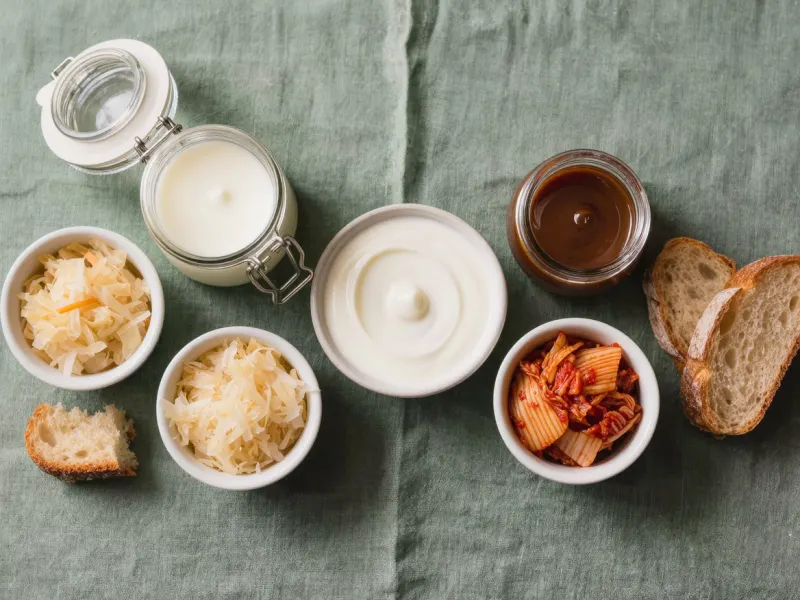
- Yogurt and kefir labeled with 'live and active cultures'.
- Refrigerated sauerkraut, kimchi and pickles fermented in brine (not vinegar).
- Miso and tempeh.
- Some aged cheeses, such as cheddar and Gouda.
Not every fermented food contains live microbes: baking (sourdough bread), pasteurizing after fermenting, or canning kills them. Fermented foods can still be nutritious, though a food is only called a probiotic when it has enough of a studied strain. Check calories for these foods in the food calorie guide.
Do you need a probiotic supplement?
Most healthy people don't. Some strains help prevent diarrhea linked to antibiotics or ease IBS symptoms, but benefits for general health or weight loss aren't well proven. If you want to try one, our guide on how to choose a probiotic explains strains and doses.
Sources
Frequently asked questions
What does a probiotic do?
Depending on the strain, probiotics may help balance gut microbes, support digestion or reduce some types of diarrhea. Effects are specific to each strain.
What's the difference between a prebiotic and a probiotic?
Probiotics are live microbes; prebiotics are fibers and other compounds that feed the helpful microbes already in your gut.
What foods are natural probiotics?
Yogurt and kefir with live cultures, refrigerated sauerkraut and kimchi, miso, tempeh and some aged cheeses.
Is it better to get probiotics from food or supplements?
For general health, fermented foods and plenty of fiber are a good start. Supplements make sense for specific uses where a strain has been studied.
This guide is general information, not medical advice. Supplements can interact with medicines and aren't right for everyone: talk to a doctor or pharmacist before starting one, especially if you're pregnant or breastfeeding, have a health condition, take medication or are under 18.