
Workout
Back workout
A good back workout combines a vertical pull (pulldowns or pull-ups), a horizontal pull (rows) and a hip hinge for the lower back, for about 10–20 hard sets a week. Together these work the lats, upper back, rear shoulders and the muscles along your spine that help you stand and lift well.
Updated Sources: CDC, ACSM
- Time
- 40–50 min
- Sets per muscle
- 10–20 a week
- Frequency
- 2× a week
- Reps
- 6–15
Who it's for
Anyone who wants better posture support, easier everyday lifting, or a balanced upper body. It pairs well with a chest workout so pushing and pulling stay in balance.
The back workout
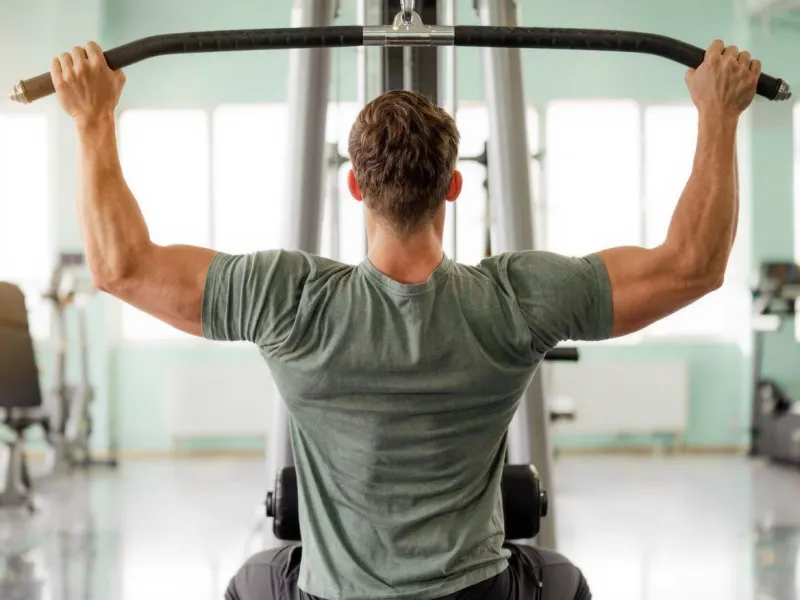
Wide-grip lat pulldown
3 sets8–12Rest 90 s
Lead with your elbows toward your back pockets.
Barbell row
3 sets6–10Rest 2 min
Hinge to about 45°, pull the bar to your lower ribs.
Seated cable row
3 sets10–12Rest 90 s
Chest up, squeeze your shoulder blades at the end.
Dumbbell row
3 sets10–12 each armRest 60–90 s
Keep your hips square; don't twist to lift more.
Face pull
2 sets12–15Rest 60 s
Pull the rope to your forehead, thumbs back.
Back extension
2 sets10–15Rest 60 s
Move from the hips, stop at a straight line; no over-arching.
Beginner and advanced variations
- Beginner: swap the Barbell row for the Chest-supported row machine, and use the Assisted pull-up machine to learn the pull-up.
- Advanced: start with the Deadlift or Pull-up (add weight when you reach 10+ clean reps), and add Pendlay row or T-bar row for heavier rowing.
- At home: Inverted row under a sturdy table and Dumbbell row cover most of the same muscles.
Form, safety and how often
Train your back twice a week, about 48 hours apart, spreading 10–20 weekly sets across the two days (volume review). Rows and pulldowns also work your biceps, so go lighter on an arm workout the next day.
Log it in KcalRing
- In Add workout, tap the Back chip and tap each exercise once to add it.
- Adjust weight and reps with − / +; pull-ups log as reps.
- After saving, the body map highlights your lats, upper back and lower back.
Sources
Frequently asked questions
How many back exercises should I do?
Three to five per session is plenty: at least one vertical pull, one row and one hinge or back extension.
Are deadlifts necessary for a back workout?
No. They're useful, but Romanian deadlifts, back extensions and rows also train the lower back well.
How do I get better at pull-ups?
Use an assisted pull-up machine or lat pulldowns, add a rep at a time, and practise slow lowering from the top.
Should my back be sore after a workout?
Some muscle soreness is normal at first. Sharp or shooting pain isn't, so stop and get it checked.
This guide is general information, not medical advice. Check with a doctor before starting a new exercise program if you have a heart condition, an injury, are pregnant or haven't been active for a while. Stop if something hurts.