Health guide
High cholesterol: LDL, healthy levels and how to lower it
High cholesterol means you have too much LDL ("bad") cholesterol or total cholesterol in your blood, which can build up as plaque in your arteries and raise the risk of heart disease and stroke. It has no symptoms, so a blood test is the only way to know. For most adults, an LDL below 100 mg/dL is considered healthy. Eating less saturated fat, more fiber and moving more can lower it, and your doctor may prescribe medicine if that isn't enough.
Updated Sources: CDC, NIH, medical societies
- Healthy LDL
- Below 100 mg/dL
- Healthy total
- Below 200 mg/dL
- Saturated fat (AHA)
- Under 6% of calories
- Symptoms
- None
LDL, HDL and triglycerides
- LDL cholesterol is called "bad" because high levels build up in artery walls.
- HDL cholesterol is called "good" because it helps carry cholesterol away; higher is better.
- Triglycerides are a type of blood fat; high levels, especially with high LDL or low HDL, raise heart risk.
| Type | Healthy level |
|---|---|
| Total cholesterol | Below 200 |
| Non-HDL cholesterol | Below 130 |
| LDL cholesterol | Below 100 |
| HDL cholesterol | 60 or higher is best; low is below 40 (men) or 50 (women) |
| Triglycerides (CDC) | Below 150 |
People with heart disease or other risks may have different targets, so ask your doctor what yours should be.
What raises LDL cholesterol
MedlinePlus lists eating a lot of saturated fat, extra weight, low activity, age, some medicines and conditions such as diabetes and kidney disease. Genes matter too: familial hypercholesterolemia runs in families and causes high LDL from a young age, even in people with healthy habits. Smoking doesn't raise LDL directly but lowers HDL.
How to lower cholesterol with food
The American Heart Association advises keeping saturated fat under 6% of calories, about 13 grams a day on a 2,000-calorie diet, and replacing it with unsaturated fats. Simple swaps:
| Instead of | Try |
|---|---|
| Butter, lard, coconut or palm oil | Olive, canola or soybean oil |
| Fatty red meat and processed meat | Fish, skinless chicken, beans or lentils |
| Full-fat cheese and ice cream | Lower-fat dairy, in smaller portions |
| Pastries and fried snacks | Nuts, fruit or avocado on whole-grain toast |
| White bread and refined cereal | Oats, barley and whole grains |
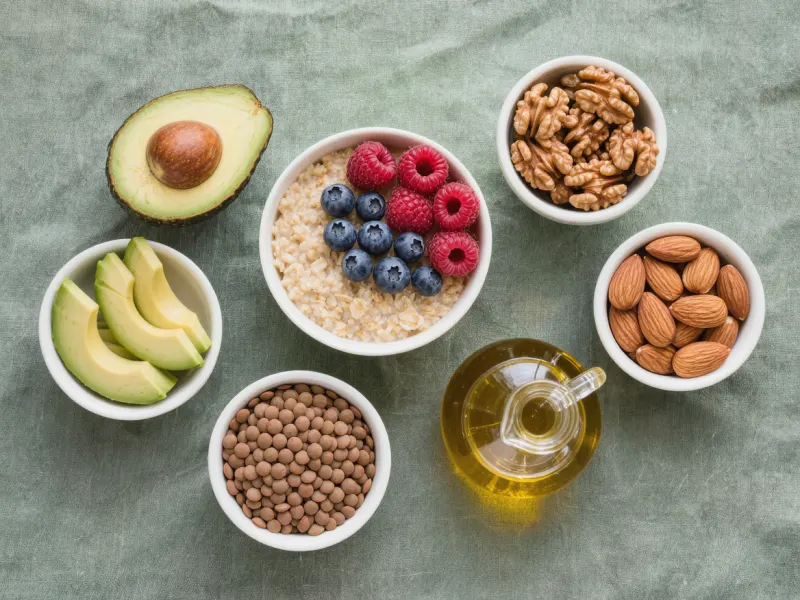
Soluble fiber (oats, oat bran, barley, beans, lentils, peas, nuts, seeds and fruits like apples and oranges) forms a gel in the gut and may help lower cholesterol. Fatty fish and avocado add unsaturated fats; read about omega-3 before reaching for a supplement, since the AHA doesn't recommend supplements for managing cholesterol.
Activity, weight and medicine
- Move about 150 minutes a week at moderate intensity; the best exercise is one you'll keep doing, from walking to a workout routine.
- Lose extra weight if you have it: find a target with the calorie deficit calculator. KcalRing can show calories and fat from a meal photo.
- Don't smoke, which helps raise HDL.
- Medicine: lifestyle changes aren't always enough, especially with family-linked high cholesterol, so your doctor may prescribe a statin or another cholesterol-lowering medicine. Keep up the healthy habits alongside it.
Sources
Frequently asked questions
What is a good LDL cholesterol level?
For most adults, an LDL below 100 mg/dL is considered optimal. People with heart disease or high risk may have a lower target set by their doctor.
How can I lower my cholesterol naturally?
Eat less saturated fat (under 6% of calories, per the AHA), more soluble fiber from oats, beans and fruit, move about 150 minutes a week, lose extra weight and don't smoke.
Does high cholesterol have symptoms?
No. High cholesterol usually causes no symptoms, so a blood test is the only way to know your levels.
What foods help lower LDL cholesterol?
Foods with soluble fiber (oats, barley, beans, lentils and fruit) and unsaturated fats (olive or canola oil, nuts and fish) in place of foods high in saturated fat, such as fatty meat, butter and full-fat cheese.
Will I need a statin?
It depends on your levels, overall heart risk and family history. Your doctor may prescribe a statin or another medicine if lifestyle changes aren't enough.
This guide is general health information, not medical advice, and can't diagnose any condition. If you have symptoms or questions about your health, talk to a doctor. In an emergency, call 911 or your local emergency number.