
Health guide
Gut health: fiber, fermented foods and plant variety
Gut health usually means a digestive system that works comfortably and a diverse community of microbes (the gut microbiome) living in your intestines. The everyday habits with the best support are eating enough fiber, a wide variety of plant foods and some fermented foods. Research on the microbiome is young, so be wary of products promising quick fixes; steady eating habits are a better bet.
Updated Sources: CDC, NIH, medical societies
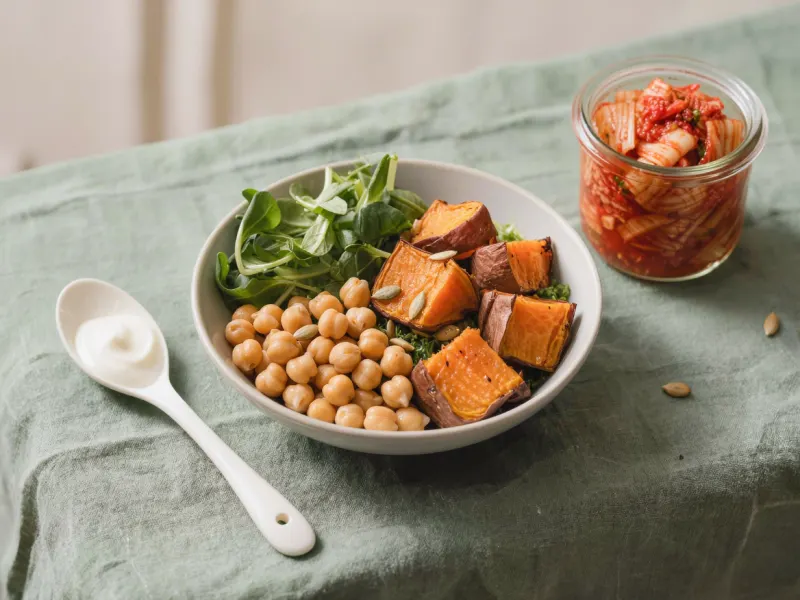
- Fiber goal
- 21–38 g a day
- US average
- About 16 g
- Plant variety
- 30+ types a week
- Add fiber
- Slowly, with water
What your gut microbes need
Trillions of bacteria and other microbes live in your large intestine. Many of them feed on the parts of plant foods you can't digest, such as fiber, and turn them into compounds your body uses. A diet that gives them more variety tends to support a more varied microbiome, which researchers link to better health, though the details are still being studied.
Fiber: the foundation
MedlinePlus recommends 21 to 38 grams of fiber a day for older children, teens and adults; Americans average only about 16 grams. There are two kinds, and most plant foods contain both:
- Soluble fiber forms a gel and slows digestion: oats, barley, beans, lentils, peas, nuts, seeds and fruits such as apples and bananas.
- Insoluble fiber adds bulk and keeps things moving: wheat bran, whole grains and vegetables.
Eat a wide variety of plants
In the American Gut Project, people who ate more than 30 different plant types a week had more diverse gut bacteria than those who ate 10 or fewer. It's an observational finding, not proof of cause, but it's an easy, positive goal. Herbs, spices, nuts, seeds, beans, whole grains, fruit and vegetables all count.
- Swap one grain: try barley, quinoa or brown rice instead of white rice now and then.
- Add a handful of beans or lentils to soups, salads and curries.
- Use a mixed bag of frozen vegetables or a mixed nut and seed topping.
- Count your different plants for a week; logging meals in KcalRing makes it easy to look back.
Fermented foods and probiotics
In a 10-week Stanford study, healthy adults who ate more fermented foods (yogurt, kefir, kimchi, sauerkraut, kombucha) had more diverse gut microbes and lower markers of inflammation. Try adding a serving a day if they agree with you; choose versions low in added sugar and watch the salt in pickled foods.
Probiotic supplements are a different question. The NIH says some strains may help in specific situations, such as preventing diarrhea linked to antibiotics, but for many uses the evidence is weak or mixed, and it isn't yet clear which strains help whom. Learn more in what is a probiotic and how to choose a probiotic. People who are seriously ill or have a weakened immune system should ask a doctor first.
When to see a doctor
Talk to a doctor about lasting changes in bowel habits, blood in your stool, unexplained weight loss, ongoing stomach pain, trouble swallowing or symptoms that wake you at night. These need checking rather than a diet change. Regular colon cancer screening from age 45 matters too.
Sources
Frequently asked questions
How can I improve my gut health naturally?
Eat more fiber, a wide variety of plant foods and some fermented foods, stay active and drink enough fluids. These habits feed a more diverse gut microbiome.
What foods are good for gut health?
High-fiber foods such as oats, beans, lentils, whole grains, fruit, vegetables, nuts and seeds, plus fermented foods like yogurt, kefir, kimchi and sauerkraut.
Do I need a probiotic for gut health?
Most healthy people don't need one. Evidence supports some strains for specific uses, but food-first habits are the base; ask your doctor before trying one if you have a health condition.
How much fiber should I eat a day?
MedlinePlus recommends 21 to 38 grams a day for older children, teens and adults. Increase it slowly and drink plenty of fluids.
What are signs of poor gut health?
Ongoing bloating, gas, constipation or diarrhea can have many causes. Lasting changes, blood in stool or weight loss without trying should be checked by a doctor.
This guide is general health information, not medical advice, and can't diagnose any condition. If you have symptoms or questions about your health, talk to a doctor. In an emergency, call 911 or your local emergency number.